


Box Tops for Education™
4.210.45K Reviews
App Specs
- Version
- 4.182.0 (2026082602)
- Updated On
- License
- Free
- Downloads
- 1,000,000+
- Developer
- General Mills, Inc.
- Categories
- Shopping
- Platform
- Android, iOS
Screenshots
 Analysis by AppCompare
I approached Box Tops for Education™ as a practical shopping companion rather than a typical rewards app. Its purpose is simple: everyday purchases can help earn cash for a school, and the app puts that process on a phone instead of leaving it to paper clips, receipts, or a separate collection routine. That narrow focus is also its biggest strength. If you already buy participating products and want a low-effort way to support a school, it can fit naturally into your weekly errands.
The app comes from General Mills, Inc. and is free to use. It sits in the shopping category, carries an Everyone age rating, and has built a sizeable audience, with more than a million installs and an average rating of 4.2 from roughly nineteen thousand ratings. Those figures do not make it automatically right for everyone, but they do suggest that the basic idea is easy for many families and shoppers to understand.
My recommendation depends less on how often you shop online and more on whether your normal grocery habits line up with the program. I would consider it for parents, grandparents, teachers, school volunteers, and anyone who wants a small contribution to happen in the background. I would be more cautious if you rarely buy eligible products, dislike checking receipts, or expect a general-purpose cashback service that rewards almost every purchase.
What I would check before committing
The first decision point is not the app itself but your shopping pattern. Box Tops works best when you are already buying products that qualify. I would not change a grocery list just to chase a small reward; the sensible approach is to scan or submit purchases you would have made anyway. That keeps the program from turning school support into an excuse for unnecessary spending.
The second question is whether you are willing to build a quick post-shopping habit. The useful mindset is to treat the app as part of unpacking groceries: finish the receipt task while the bags are still on the counter, rather than promising yourself you will remember later. A reward app can be technically simple and still fail in daily life if the required action is easy to postpone.
I also looked at the audience it serves. This is not a broad personal-finance dashboard, a supermarket comparison tool, or a coupon organizer. Its value is tied to directing eligible shopping activity toward education. That makes the decision more personal than a normal cashback calculation. You are choosing a specific kind of benefit, not merely trying to maximize money returned to yourself.
There is another practical consideration: who will manage the account and the school connection. In a family, one person should take responsibility for the routine, even if several people shop. Otherwise, receipts can be forgotten, duplicated, or left in different places. A shared household note or a simple “submit after the grocery trip” reminder can make the process much more reliable without adding much work.
Worth Reading Before You Choose

EA SPORTS FC Mobile 26 Is a Bigger Football Game, but It Takes Time

Flipboard Shows What News Apps Must Do Beyond the Feed

Switching to Android Auto Means Rethinking Your Driving Routine

Google Calendar Makes a Crowded Week Easier to Manage

Ludo King Makes the Most of the Minutes Between Plans

Baby Panda World Brings Quick Play to Modern Phones, but Its Game Library Feels Busy
How the everyday workflow feels
In a realistic scenario, imagine a parent doing the weekly grocery run on a Saturday morning. After unpacking, they open the app, deal with the purchase record while the receipt is easy to find, and make sure the activity is directed toward the intended school. That sequence is more dependable than waiting until the end of the month, when receipts may be lost and memories become vague.
I found that the best workflow is immediate and boring. That is a compliment here. The app does not need to become a major part of your day. Use it at the same point in the shopping routine every time, and it becomes closer to sorting recycling than managing a complicated rewards portfolio. The less emotional effort involved, the more likely the school actually benefits from your purchases.
A useful tip is to keep the phone available during the transition from store to home, but not to make the process dependent on a perfect schedule. If you shop with children, the task may be easier once everyone is settled. If you shop during a rushed lunch break, postponing the submission until later may be reasonable, but I would still place the receipt somewhere visible rather than trust memory.
Why the school-focused design stands out
The strongest feature is the destination of the reward. Many shopping apps make the user think about personal savings first, while this one gives the activity a community purpose. That changes how I judge the experience. A modest return can feel worthwhile when it supports a school selected by the household, especially for people who want to contribute but cannot make regular donations.
This also makes the app useful for people who are not looking for another source of personal spending money. A grandparent can participate from normal grocery purchases, a teacher can explain the idea to families, and a school supporter can contribute without organizing a separate fundraiser. The app turns a routine transaction into a small, repeatable action rather than asking for a large one-time commitment.
Another non-obvious advantage is that the app can help a household make its support more consistent. Donations are easy to remember around special events and easy to forget during ordinary weeks. A shopping-linked routine spreads participation across the year. I would not describe it as a replacement for direct giving, but it can complement direct support by making small contributions automatic in spirit, even though the user still needs to complete the shopping-related step.
Where the experience can become frustrating
The same narrow design that gives Box Tops its identity also limits it. If your usual products do not qualify, the app will not suddenly become a useful general cashback tool. I would not download it expecting rewards for every receipt, every retailer, or every kind of household purchase. The program makes sense only when your normal basket overlaps with its eligible products and your preferred school can benefit.
Receipt handling is another point where patience matters. Any shopping workflow that depends on capturing purchase information can feel inconvenient when a receipt is long, faded, folded, or mixed with several errands. I would make sure the important details are readable before throwing the paper away. This is not an advanced trick, but it prevents the most avoidable mistake: disposing of the evidence before completing the task.
Timing matters as well. A person who shops infrequently may accumulate receipts and try to process them in one sitting. That can be efficient, but it also creates a single failure point. If something is unclear, the entire batch becomes a chore. My preference is to handle each shopping trip separately, even if that takes a little longer overall.
I also would not recommend it to someone who feels pressured to buy specific branded products for the sake of earning. The school benefit should come from purchases that already fit the household budget and preferences. Once the reward becomes the reason for the purchase, the economics become less attractive and the app loses its practical character.
How it compares with other ways to support a school
The closest alternatives are not necessarily other apps. They include direct donations, school fundraisers, paper-based collection programs, and general shopping-reward services. Each category solves a different problem. Direct giving is clearer and more flexible when you want to choose an amount and act immediately. A fundraiser may offer a stronger social connection. A general cashback app may be better if your priority is personal savings across many retailers.
Box Tops has an advantage over a paper collection routine because the phone can become the central place for managing the activity. That reduces the need to cut packaging, store pieces in a drawer, and remember to send them in. For households that already live through their phones, this is a meaningful improvement. For someone who prefers physical reminders and rarely opens shopping apps, the digital method may not feel simpler.
Compared with direct donations, the trade-off is convenience versus control. You do not have to set aside a separate donation each time, but your support depends on eligible shopping and consistent participation. If you want to make a precise contribution on a particular date, a direct method may be more suitable. If you want small support to arise from purchases you already make, this app has the better fit.
Compared with broad cashback services, the trade-off is purpose versus coverage. A general rewards platform may appeal to someone who wants to optimize personal returns across different kinds of spending. Box Tops is more focused: the meaningful outcome is helping a school. I would choose between them based on the goal, not on the assumption that one can replace the other.
There is also a social difference. A school-focused program can give families a shared conversation about where everyday support goes. That can be useful in a classroom community or household with children who want to understand how shopping can help their school. A standard cashback app may be financially useful but less connected to that shared purpose.
Who should use it, and who should skip it
I think it is a good match for people who already shop for household groceries, want to support a particular school, and can spare a short moment after shopping. It is especially approachable for families that want a low-pressure contribution method. The free price removes the financial barrier to trying it, while the Everyone rating makes it suitable for a broad household audience.
I would skip it if you are looking for investment tools, coupon stacking, price alerts, meal planning, or a complete grocery-management system. Those are different jobs. I would also skip it if your shopping is almost entirely outside the kinds of purchases connected with the program, because the app cannot create value from activity you do not normally perform.
It may not be ideal for a household where several people shop independently and nobody wants to coordinate. In that situation, the problem is not necessarily the app’s design; it is the lack of a clear owner for the routine. Before installing it, decide who will handle submissions and which school should receive the benefit. That small agreement can prevent confusion later.
What to know about installing and keeping it useful
The app was released on September 6, 2016, and its current version is 4.182.0 (2026081001). It requires at least iOS or Android 10, so I would check the operating system on an older phone before planning around it. That requirement is especially relevant for families sharing an older device or using a phone kept mainly for household tasks.
Because it is free, trying it does not require a subscription decision or an upfront purchase. Still, I would judge it after a few ordinary shopping trips rather than after one enthusiastic session. The right test is whether the routine survives a busy week, not whether the first interaction feels promising.
One practical habit is to separate “eligible shopping” from “reward chasing.” Keep buying what fits your budget, then use the app to capture the benefit. This protects the household from spending more than planned and gives you a fair way to assess whether the program is genuinely convenient. If the process repeatedly interrupts your errands, the school-support goal may be better served through another method.
The app’s popularity also makes it easier to take seriously as an established shopping tool, though popularity is not a substitute for personal fit. Its roughly ten thousand reviews and broad install base show that many people have engaged with it, but my own decision would still come down to product eligibility, school connection, and whether I can maintain the habit.
My recommendation after weighing the trade-offs
I would recommend Box Tops for Education™ to a family that wants school support to grow out of normal grocery shopping. It is focused, free, and easier to integrate than a paper-collection routine for people who already use their phones to manage errands. The strongest reason to install it is not the promise of personal savings; it is the chance to turn ordinary purchases into a modest, ongoing contribution.
I would not recommend changing your shopping habits around it or treating it as a universal rewards wallet. Its usefulness depends on eligible products and follow-through, and those limits matter. If your main goal is the highest possible personal cashback, compare it with a broader rewards category. If your main goal is a clearly directed school benefit with minimal financial commitment, this is the more natural choice.
My final advice is to make the decision operational: choose the school, assign one person to manage the activity, and process the shopping task while receipts are still easy to find. If that routine feels reasonable after several trips, keep using it. If it becomes another forgotten obligation, switch to direct giving or a school fundraiser instead. The app works best when it supports habits you already have, rather than asking you to build an entirely new shopping life around it.
Pros
- Turns everyday grocery purchases into support for participating schools.
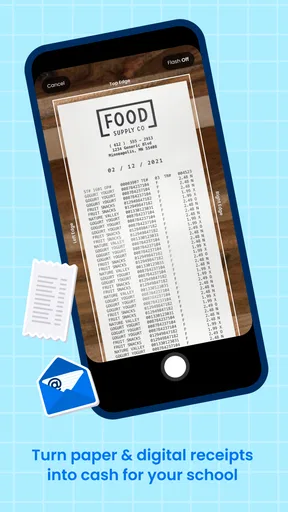
- Receipt scanning makes it easy to submit eligible purchases from your phone.
- Offers a simple way to track earnings connected to your school.
- Digital offers can help families discover products with Box Tops rewards.
- Supports school fundraising without requiring students to sell items directly.
Cons
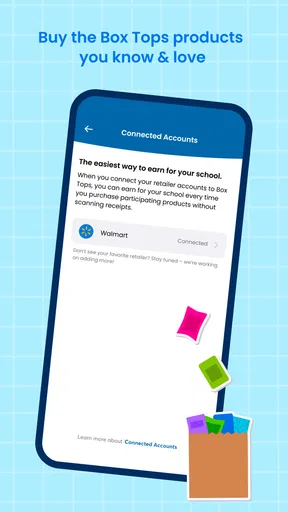
- Only qualifying products and participating retailers count toward rewards.
- Receipts must be submitted within the program’s allowed time frame.
- Offer availability and product eligibility can change frequently.
- Some users may need to verify purchases or resolve rejected receipts.
- Rewards depend on participating brands
- stores
- and school enrollment.
FAQs for Box Tops for Education™
What is Box Tops for Education™ and how does it work?
Box Tops for Education™ is a fundraising program that helps participating schools earn money from everyday household purchases. Instead of collecting physical coupons, users typically scan eligible receipts through the app after shopping. The app identifies qualifying products and credits the associated earnings to the school selected in the user’s account, making routine grocery purchases a simple way to support education.
How do I choose a school and submit a receipt in the app?
After creating or signing in to your account, you can search for a participating school by name, location, or other identifying details and select it as your beneficiary. Following a qualifying purchase, open the app and use the receipt-scanning feature. Make sure the receipt is clear, complete, and submitted within the program’s stated time limit so eligible items can be reviewed.
Which purchases qualify for Box Tops earnings?
Not every item shown on a grocery receipt will generate a Box Tops contribution. Eligibility depends on the products and promotions currently listed in the app, participating retailers, and the program’s rules. Before shopping, check the app for qualifying brands or offers, and review the receipt after checkout to confirm that the purchased products match the requirements.
Are there deadlines or limits for scanning receipts?
Yes. Receipts generally must be submitted within a specific period after the purchase date, and the app may apply additional rules concerning duplicate submissions, retailer eligibility, or promotional limits. Because these conditions can change, it is best to scan receipts soon after shopping and read the current offer details inside the app before assuming a purchase will qualify.
Is Box Tops for Education™ free and what information does it require?
The app is generally free to download and use, although standard mobile data charges may apply if you are not connected to Wi-Fi. Registration may require basic account information, such as an email address, along with permission to use the camera for receipt scanning. Review the app’s privacy policy and permissions so you understand how submitted information is handled.


